
Custom phone cases: one artwork, many models
Every phone model is its own print surface — camera cutouts, edges and proportions move the safe area under your design. How to plan the model matrix, adapt artwork per model, and choose print coverage before ordering.
OFFPRESS editorial · Based on direct observation of real pieces · Stage: First order · 6 Sept 2026
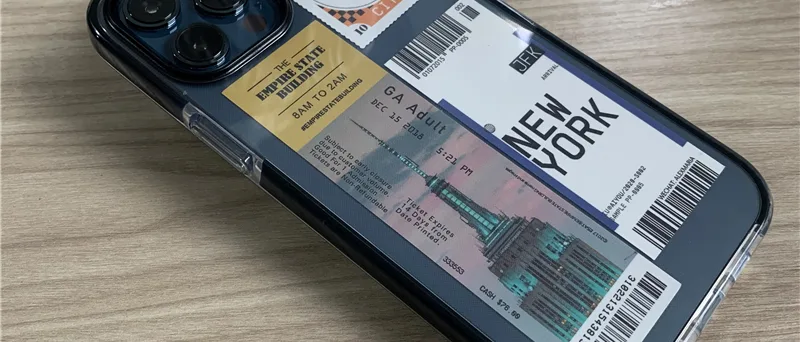
It’s tempting to treat “phone case” as one product with size variants. A printed case doesn’t work that way: every phone model is its own print surface. The camera module sits in a different corner, at a different size, in a different shape; ports and buttons move; proportions shift slightly between generations. One artwork file cannot serve every model — not because of resolution, but because the shape of the safe area moves under your design. The order that works: plan which models you’re actually producing first, adapt the artwork per model second, and sample the model that carries the most units. Clear printed cases are part of our made-to-order range — model coverage is confirmed with your quote.
Why each model is its own print surface
Three geometric facts, all visible in the cases we’ve produced:
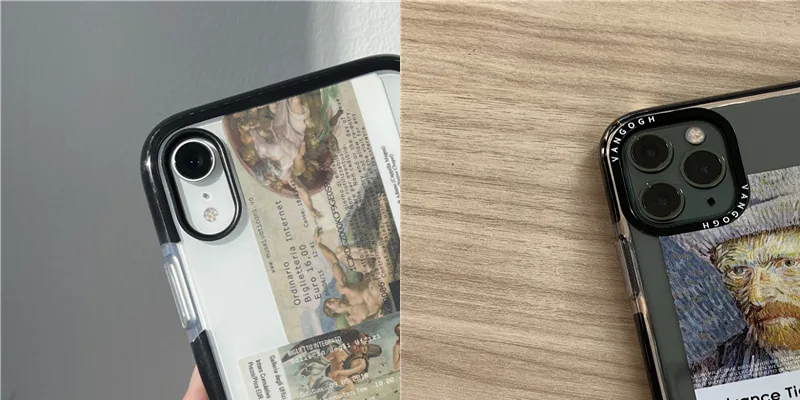
- The camera cutout is the biggest hole in your canvas, and it moves. One model has a single small ring in the corner; another has a square module covering three lenses and a flash; a third puts the module elsewhere entirely. The cutout eats whatever artwork sits under it.
- Proportions differ between models. Backgrounds that fill one model’s back panel crop differently on the next — a composition that clears the camera on one model can drift straight into the module on another.
- Edges behave differently by case construction. Some printed cases wrap artwork around the sides; clear printed cases usually keep the print flat on the back panel with the sides clear. Which of those you’re buying changes how much canvas you actually have — full-wrap printing on clear cases is a different construction, and one supplier’s edge-to-edge wrap is another supplier’s flat print, so it’s worth asking which method your supplier uses.
Plan the model matrix before the artwork
The model universe is enormous — one custom-case maker advertises more than 200 models across iPhone, Galaxy and Pixel lines — and it rotates under you: print-on-demand guides point out that a customer who buys a case for today’s Galaxy needs a different model case in about two years, and that sellers who don’t keep up with new releases miss that wave entirely. For a small-batch buyer the conclusion isn’t “chase every model.” It’s:
- Pick models by your audience, not by coverage ambition. The devices your actual customers carry are worth more than a complete catalogue.
- Fewer models with real stock beats every model shallow. Cases for retired models become dead stock faster than any other merch you can order — the product is tied to a device with a two-year shelf life.
- Split quantities per model the way you’d split across designs — by expected demand, not evenly. The logic is the same one as splitting quantities across designs, applied to hardware instead of artwork.
- Treat one artwork across models as a within-format version of one design across several products: reuse the concept, re-fit the file. The mark and palette stay; the safe-area layout gets adjusted per model.
Design around the cutout
The cutout is the constraint that turns “resize the artwork” into actual design work. What works on real cases:
- Treat the camera zone as a no-go area with a margin. The exact rectangle differs per model, so the honest workflow is designing with the supplier’s per-model template, not a guessed circle.
- Put the hero element in the lower two-thirds. On most current models the module lives near a top corner — “most” is the honest word, which is exactly why the per-model check exists.
- Build artwork in layers — background field, hero, small print — so the per-model file is a mask adjustment, not a redesign.
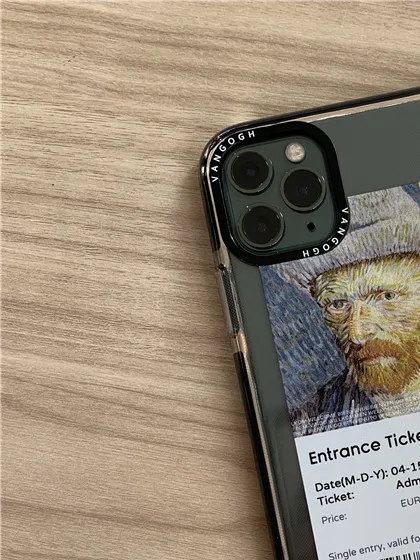
- Or use the cutout deliberately. The clearest example in our range: type set in a ring around the camera module, turning the constraint into part of the design. Ring designs are the least forgiving layout in phone cases — the print has to meet the cutout precisely — so they need the supplier’s template confirmed and a physical sample before a full run.
Full-bleed, clear-edge, or barely there
On a clear printed case, coverage is a design decision more than a price tier — because the phone itself becomes part of the design:
- Full-coverage print — artwork edge to edge on the back panel. The design is the product; the phone’s own colour disappears underneath.
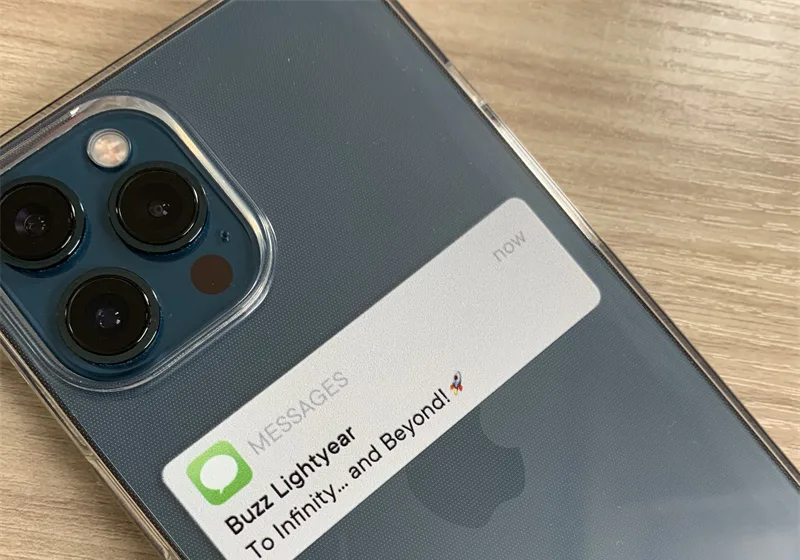
- Clear-edge — artwork contained to a zone, sides and margins clear. The phone’s colour shows around the design, so the same print reads differently on every phone it lands on.
- A single printed element — the case nearly vanishes. In sunlight you see how clear it really is; the print becomes a detail rather than a surface.
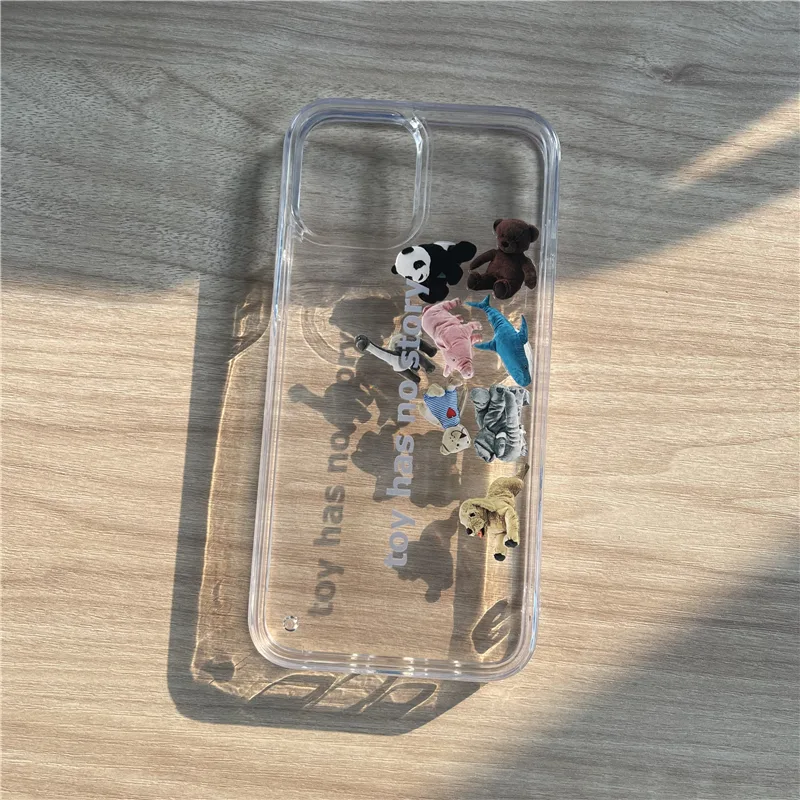
None of these is the “premium” option. Full coverage hides the phone; clear-edge and minimal prints collaborate with it. Which one is right depends on whether the artwork is a scene (wants coverage) or a mark (wants air) — the same judgement as choosing a base in sticker options.
Sample the model you’ll sell most
One model’s approved sample doesn’t prove the next model. Cutout alignment, edge behaviour and colour on the case material are all per-model questions — each model is a new production die. Approve the sample on the model carrying the most units, and treat any additional model as its own (smaller) approval. That’s the same logic as the sample gate before production, applied per model instead of per design.
When you send the brief, the model list plus coverage intent plus artwork is enough to quote — and enough for us to tell you honestly which parts we’d want to sample first.
Researched and written by the OFFPRESS editorial desk. General production principles are kept separate from order-specific figures — anything that depends on your job (lead time, sample cost, freight) is marked as confirmed with your quote, not stated as a blanket promise.
KEEP READING